Showing posts with label fiction writing. Show all posts

Saturday, September 8, 2012

Should You Plan Your Writing or Be Spontaneous?


The obvious answer to the above question is, “It depends on the writer and/or the story.”

But since obvious answers are as helpful as an umbrella in a flood, let’s see if we can be more specific.

Spontaneity can be defined as that quality of writing where you start out and don’t know where you’re going: making it up as you go along. 

Planning is exactly that: having a detailed outline or map of where your story is going, who’s in it, what they are doing and why, etc.

Most writers would probably say they use both spontaneity and planning to one degree or another. And both tools are valuable for writers. Spontaneity keeps your story fresh and exciting; planning keeps your story from going off track or trying to accomplish too much. 

Yet there's a downside to spontaneity. It can easily lead your story astray with characters, ideas, and plot lines that lead nowhere. Stories that rely too much on spontenaity read like dreams: one idea leads to another, and then another idea pops up, and, before long, you’ve lost sight of the original idea.

The downside of planning is that an overly detailed outline can leave your story with little room to grow in ways that surprise both you and your readers. Such stories often read like a response to an argument no one has made: the writer has determined what the “answer” will be, although no one’s asked that particular question.

Here are five tips for finding the right blend of spontenaity and planning that works best for your story:

1. Determine the ending of your story.  Some writers write the ending first or very shortly after they write the beginning.  Others keep the ending firmly in mind.  Whatever your approach, you will keep your story on track (and your interest level high) if you have a specific goal to shoot for.

2. Do not determine exactly how you get to that ending.  Have a general outline or map in mind, yes, but resist the impulse to make it so detailed that you are in effect telling your story before you actually write it. Instead, know where the story’s plot points will be: the inciting incident, the climax, the denouement, etc. 

3. While writing, check your Brilliant New Idea against the above structure.  Will this new character take your story toward its ending?  If not, do you really need him?  If there’s a strong possiblity he might move your story tward its conclusion, let him stay but keep him on a tight leash until you know you can trust him.

4. Write more than one draft.  This almost goes without saying. Yet its surprising how many writers think their first draft should be the final one. Multiple drafts give you time to experiment with new approaches.  They let you see what that Brilliant New Idea has to offer.

5. Be willing to accept the possibility that your story may go in a different direction than the one you planned. Of course, this means knowing what the “heart” of your story is and what you want (in the abstract sense) to accomplish. 

I recently put this idea to the test. In my Compostion I classes, I had students brainstorm ideas for a paper they will be writing. I knew generally what I wanted: a list of topics any student could write about.  (Sorry, Dr. Who fans.  Not everyone watches that show.)  We ended up with a list of 23 topics. I then asked a student to pick a number between 1 and 23, each number corresponding to a particular topic. Then, for whatever topic was selected, we brainstormed ideas and possible audiences and purposes for it.

Exercises such as this always carry risks. What if the topic selected doesn't interest most students? What if it doesn’t interest me? What if my students are shy and don’t want to participate?

Yet the exercise worked marvelously. It demonstrated my abstract goal of showing students how a writer can brainstorm ideas for any topic.

Likewise, the ending of your story may change, but knowing the heart of your story means you can still get there even if the route changes along the way.

Spontaneity and planning work together to create a story that is exciting both for yourself and for your readers. Although there is no formula for determining how much of either tool you should use, it helps to have a clear plan in mind with the caveat that it’s subject to change. 

Know where you are going, but let your muse do the driving.

How much spontaneity versus planning do you include in your writing?

Saturday, August 25, 2012

Raise the Stakes for Your Character!


Writing a story is sometimes compared to having children: You, the parent-author, conceive the story, nurture it, and make sacrifices to bring it into the world.  Then you guide it, correct it when necessary, and hope it will make you proud, perhaps even take care of you in your old age.

Writers, like parents, also want to spare their “children” of any danger, grief, or hardship. 

But, as a writer, you must be cruel to your characters. You must treat them harshly, give them coal for Christmas, deny them their fondest dreams, and expose them to situations which, in the real world, would result in a visit from Child Services.

In short, something must be at stake for your characters. And the stakes must be high.
 
A story, by definition, is about a character who wants something and is prevented from getting it:
  • In The Wizard of Oz, Dorothy wants to go home. What’s preventing her from getting there?  The Wizard and the Wicked Witch of the West.
  • In Harry Potter and the Deathly Hallows, Harry wants to defeat Lord Voldemort, but the evil one and his crony wizards go to great lengths to prevent this.
  • In The Hunger Games, Katniss wants to win.  What’s standing in her way?  The other contestants, the game’s controllers, and a decadent society that revels in children killing children.

But goals and obstacles are not enough. Something must be at stake if your character fails.
  • If Dorothy doesn’t go home, she may spend the rest of her life in Oz, and the Witch will do mean and nasty things to Toto.
  • If Harry doesn’t defeat Lord Voldemort, the evil wizards will take over the world and subjugate muggles and mudbloods.
  • If Katniss doesn’t win, she dies. Plain and simple.

Yet this need to create stakes runs counter to what we, as writers, want for our characters. Just as no parent would willingly see their child suffer, we want to make it easy on our fictional children. We want them to be winners without having to struggle.

But real life, we know, doesn't work that way. And neither should your story.     

One of the fundamental reasons why people read stories is to experience characters as they overcome obstacles—things which terrify us or make us angry.

Giving your character an easy ride robs your readers of the insights and catharsis that make the journey worthwhile.
  •  Dorothy, who had started out wanting to be "somewhere over the rainbow" learns "there's no place like home."
  • Harry, a once unloved and friendless orphan, makes friends and becomes a leader among the good wizards.
  • Katniss (at the end of the first movie, at least) learns that by being true to herself, she can break the rules and effect change in society.

These are the types of insights your readers want to experience. And they don't come easy.

But can’t your character solve a mystery, for example, without having anything personal at stake?

Sure. Fictional detectives do it all the time. But even if Hercule Poirot and Miss Marple do not always place themselves in danger (though sometimes they do), the stakes are still high.

If the detective doesn’t win, the murderer gets away. 

That, most of us would agree, would be bad. The murderer may kill again. Also, any crime--in real life as well as in fiction--disrupts our sense of safety and right and wrong. We demand the perpetrators get caught and punished. When this doesn't happen, our trust in the moral order of the universe is shaken. 

(Which may be why some stories have the good guys lose on purpose. But even losing comes after a valiant struggle with much at stake.)

So, go ahead: raise the stakes for your character.  The higher the stakes, the greater her victory (and ours) will be.

Saturday, June 2, 2012

Why Writers Can’t Please Everyone

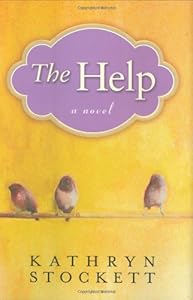
Cover of "The Help"
Cover of The Help
Several scenes in Kathryn Stockett’s novel, The Help, depict the verbal and physical abuse of one of the black maids by her own husband. Two other maids who figure prominently in the story were abandoned by their husbands long ago.

Some contend that the novel promotes stereotypes of black men being abusive or absent.  In “An Open Letter to Fans of The Help,”  Ida Jones, national director of the Association of Black Women Historians, and four co-authors level this and several other charges against the novel.

Jones claims The Help “distorts, ignores, and trivializes the experiences of black domestic workers,” relies on “an irreverent depiction of black vernacular” and downplays the sexual abuse black maids often faced from white employers.

Whether or not the criticisms are justified is a topic for another blogger.  But, to this blogger, they illustrate how no writer can afford to please everyone and how any piece of writing, regardless of its intent, is bound to offend someone.

I don’t wish to downplay the very real issues Jones addresses.  As she asserts, the history of black Civil Rights activists in Mississippi  is much more complex than depicted in the novel and deserving of in-depth examination in both fictional and nonfictional works.

However, Jones seems to want The Help to be all things to all people.  She writes,
. . . the film [version of the novel] is woefully silent on the rich and vibrant history of black Civil Rights activists in Mississippi . . . . Portraying the most dangerous racists in 1960s Mississippi as a group of attractive, well dressed, society women while ignoring the reign of terror perpetuated by the Ku Klux Klan and the White Citizens Council, limits racial injustice to individual acts of meanness.
Which would be well and good had Stockett written an academic treatise on the Civil Rights struggle in Mississippi.

Instead, she wrote a work of popular fiction told through the viewpoints of three characters—two black maids and a white woman who aspires to being a journalist. Thus, the story is necessarily limited to the "dangerous racists" and "individual acts of meanness" they encountered—acts such as being fired capriciously, being accused of stealing, and being forced to submit to sexual advances (which is mentioned in the novel, albeit briefly).

Stockett made several critical choices in writing The Help, including who to focus on.  For example, it isn’t just black men who are absent and abusive—it is men in general.

Most of the male characters in The Help are minor or have little bearing on the story.

  • Skeeter’s father, probably the most sympathetic male figure, remains oblivious to his daughter’s clandestine adventures and his wife’s self-serving machinations. 
  • Skeeter’s boyfriend is a drunk. 
  • His father, a senator, also drinks to excess and upholds racial policies with which he personally disagrees.
  • The husbands of Aibileen’s and Minny’s employers are largely absent, and though the latter turns out to be a good guy, he comes off as one-dimensional.

As a male reader—if I took Jones’ message to heart—I should be offended that there are no positive, well-rounded male figures in the story.

Instead, I got an altogether different message from the book. I understood that I was reading a fictional story told from one writer’s point of view—and particularly from the points of view of three characters who saw the men in their lives in these ways. I understood that Stockett’s larger intent was to highlight the nobility of black and white women who faced up to the unfair system under which they lived. 

One might quibble over the manner in which they “faced up” to that system—writing an anonymous book—but this development highlights the fears which prevented blacks and whites (particularly the former) from telling the truth about the conditions under which they lived and worked. 

In other words, the heroes of Stockett’s novel aren’t Civil Rights activitists, as Jones seems to prefer, but ordinary women  living ordinary lives in a society suppressed both color and gender.

Stockett, I believe, chose to focus exclusively on female characters because women in the 1960s South, and elsewhere, had little personal choice in their lives. They were expected to become wives and mothers, not to hold careers such as journalism. 

Black women had even less ability to change their lives. A telling moment in the novel occurs when Skeeter asks Aibileen if she ever wanted to be anything other than a maid, and Aibileen answers no. This moment calls into sharp relief the fact that white, rich Skeeter—in spite of her overbearing mother’s dreams for her—has had opportunities denied women in Aibileen’s position.

Stockett doesn’t perpetuate stereotypes so much as she shines a harsh light on a one-sided reality.

As a male reader, I was not turned off by the absence of sympathetic male characters. Rather, I was drawn into the fictional lives of vivid characters whose universal desires transcend time, geography, and even gender. This ability to bridge differences lies at the heart of all good writing.

The novel brilliantly shows how all three women face difficult decisions which lead to turning points in their lives. The novel is not, as Jones asserts, a simplistic "coming of age story of a white protagonist, who uses myths about the lives of black women to make sense of her own." Rather, it shows how people from different walks of life can overcome prejudice and fear to learn from one another.

No story can be everything to all people. Stockett's refusal to address some of the issues Jones brings to light is far from a failing. Rather, it shows how she understood and stayed true to her purpose.

If you like this article, you may also like:


Enhanced by Zemanta

Saturday, March 31, 2012

Playing the Game: How The Hunger Games Combines Adventure and Social Commentary

The Hunger Games (film)The Hunger Games (film)
(Photo credit: Wikipedia)


Jumping through hoops. Scratching someone else’s back. Tit for tat. Playing the game.

These are all terms young people face at some point in their lives if they want to succeed in the so-called adult world.  It’s not what you know—it’s who you know. It doesn’t matter how wonderful, talented, unique, and bright you are—you have to get people to like you.

And there is a lot of truth to these sayings. The world is run by imperfect human beings, many of whom got where they are by playing similar games. Yet most of us hope we can succeed on some level by being who we are, not by being forced to become something we’re not.

Enter The Hunger Games with its horrifying version of “playing the game” and what young people must do not only to succeed but to survive: kill each other.

In case you’ve been hiding in a cave for the last few weeks, The Hunger Games is the latest film franchise (based on a trilogy of novels by Suzanne Collins, who also co-wrote the screenplay) to be touted as the heir apparent of Harry Potter. (Succeeding a popular film franchise is, itself, a game, which makes The Hunger Games almost a parody of itself.) Like HP, HG is set in fantastic world in which young people must fight against overwhelming odds to survive and make a positive difference in the world.

But the differences between Harry Potter and The Hunger Games are more striking than the similarities. HG features a female protagonist (Katniss Everdeen). Instead of using a magic wand, she uses a bow and arrows. Instead of being helped along her journey by supportive friends such as Hermione and Ron, Katniss faces 23 youthful competitors whom she must kill or who will kill her. Instead of being guided by caring, powerful adults such as Dumbledore, she’s on her own, her every move observed by voyeuristic, decadent adults who get their jollies by watching kids kill kids.

Harry Potter, meet reality TV.

Of course, there’s much more to The Hunger Games than superficial comparisons to another successful film franchise. Indeed, the dark premise of The Hunger Games seeks to offer social commentary couched in the trappings of a Young Adult adventure story. It succeeds more often than not, and, for writers, it gives us a vivid demonstration of how to play our own game.

Just Another Adventure Story?

The Hunger Games is set in a future America called Panem, ruled by an effete, spoiled and insanely rich upper class. The Have Nots of this world live in 12 impoverished districts. Each district must satisfy the rich overlords’ annual lust for entertainment by offering up a male and female “tribute” between the ages fo 12 and 18 to participate in the Hunger Games, a violent Romanesque blood sport.   

Sixteen-year-old Katniss (played by Jennifer Lawrence) volunteers to take the place of her younger sister, Primrose. Fortunately for Katniss, she has spent her young life sneaking into the forest outside her district and learning to hunt. She can use a bow and arrow (quite expertly, in fact, as she demonstrates to a group of would-be sponsors by shooting an apple out of the gamemaster’s hand). She can climb trees and track animals. These skills put the odds of surviving decidedly in her favor.

And it’s a good thing, too. Katniss finds herself facing not only 23 kids who must kill her but also a forest fire, mosquitoes whose bites cause hallucinations, and ravenous beasts conjured at the gamemaster’s whim. In short, The Hunger Games combines breakneck action and imaginative scenarios which are bound to lure viewers into theaters (and readers into books). 

(Bowing to the sensibilities of its audience (and perhaps to secure a PG-13 rating), the film glides over the violence aimed at children.  Most deaths are shown in quick cuts without blood and gore. Still, it is perfectly clear what is happening, which makes the deaths all the more disturbing.)

Mirror, Mirror . . . on the TV Screen

One of the films previewed before the start of The Hunger Games was Snow White and the Huntsman, a lavish retelling of the familiar Disney classic. Snow White uses a literal mirror as a character who tells the evil queen she’s “the fairest in the land” but forces her to face an unpleasant truth: her beauty will one day be surpassed by that of Snow White.

The mirror used in The Hunger Games is metaphorical but no less “in your face”. Every time the film shows the Capitol and it’s heavily mascaraed citizens clamoring for tributes, I couldn’t help thinking of our present-day immersion in celebrities and the growing divide between the super-rich and rest of us (the 1 percent/99 percent mantra). Corporations and oil companies rule the day, and presidential races appear to be nothing more than contests for rich people who don’t know (or care) what’s it’s like to work hard and still fall behind.

Whether The Hunger Games says anything meaningful about the current state of affairs is debatable. What it does is escalate these twin phenomena of celebrity immersion and income disparity to ridiculous extremes. But are they so ridiculous? In the age of Charlie Sheen, it’s hard to say yes. While people have sat glued to their screens, awaiting the latest mishaps of celebrities du jour, young people have spent the last ten years dying in wars in Iraq and Afghanistan. Sure, we have “reasons” to justify slaughter, but so do the residents of Panem.

It’s to The Hunger Games’ credit that it doesn’t offer easy solutions (or any solutions, really—this is only the first film in the series). An uprising—evoking the Occupy movements—is shown briefly, but, in the end, Katniss learns to play the game as much as she learns to bend the rules a little (or, rather, to persuade those in charge to bend the rules for her benefit). Likewise, she does not come away with a new mission in life (as one might expect for the hero of an adventure story), but rather with a sense of “What do we do now?”

So it is in life.

This question does not have to be answered in a two-hour movie (nor even in a novel). Having the courage to ask the question is what elevates The Hunger Games and makes us—even writers—more fullly aware of the games we are all playing. 

Enhanced by Zemanta

Saturday, January 7, 2012

Silliest Story Ever? What Writers Can Learn from Adventure Comics # 267

Source: Grand Comics Database.  All
characters and images © and  ™
DC Comics Inc.
All writers dread writing that one story that totally sucks – the one that starts out with the greatest idea ever yet turns out to be a turkey that, no matter how hard it tries, will never fly.

But fear not.  Even professional writers write – and publish – stories that leave readers asking “What was he thinking?” (or, less charitably, “What was he smoking?”).

Case in point: “Prisoner of the Super-Heroes,” first published in Adventure Comics # 267, December 1959, and available in several reprints, including Showcase Presents the Legion of Super-Heroes # 1.

The story was written by Jerry Siegel (yes, that Jerry Siegel – co-creator of Superman) and drawn by George Papp.

Written during the dawn of the Silver Age of Comics, when super-heroes were just starting to make a comeback after several years of declining popularity, "Prisoner of the Super-Heroes" was also published a few years following the enactment of the Comics Code Authority.  The CCA – the comics industry’s self-censorship mechanism – mandated that comics were for children and should be bland and inoffensive.

Still, inventive comics creators churned out classic stories and characters on a regular basis during this period, including new versions of The Flash, Green Lantern, and the Justice League of America. 

And then there’s “Prisoner of the Super-Heroes”.  What's wrong with this story?  Well, let's see . . .

Science Fiction Gone Bad

Here's the premise: Three members of the futuristic Legion of Super-Heroes (in the Legion’s second appearance) arrive in the present day and make Superboy look bad by upstaging him while he is trying to perform super-feats.  The townspeople, his foster parents, and even his dog turn against Superboy, who feels so bad he leaves earth.

The Legionnaires then trick Superboy into coming to an artificial planet, where they imprison him in a kryptonite cage.  The reason?  Historical records of the next few years of Superboy's life were incomplete until a recently invented device called a futurescope shows what is supposed to happen: In five years, Superboy will turn evil, destroying a U.S. aircraft carrier, an airstrip, and a factory.

The Legionnaires, therefore, have come back in time to imprison Superboy for crimes he has not yet committed.

Well, who wouldn’t want to travel back in time and prevent Adolf Hitler, Al Capone, or Mohamed Atta from committing their acts of evil?

But what might have started out as a thoughtful science fiction tale quickly deteriorates into an implausible plot filled with characters acting in bizarre ways and a deus ex machina ending.  “Prisoner of the Super-Heroes” reads like a rejected Twilight Zone episode (though Twilight Zone thrived on the bizarre).

The Superboy Smear Campaign

Think politicians have it rough when their opponents denounce them in the media?  That’s nothing compared to what poor Superboy goes through.  As part of their plan to make the Boy of Steel leave earth, the Legionnaires thoroughly discredit him, first by upstaging him when he tries to help others and then (through the telepathy of Saturn Girl) turning his foster parents and even his dog against him. 

And these are supposed to be heroes?

Others have pointed out that, in early stories, the Legionnaires don’t act heroic – particularly toward applicants who try out for their club.  Still, the dirty tricks the Legionnaires display here could have taught Tricky Dick Nixon a thing or two.

J’Accuse!

The film Minority Report features a horrific account of what might happen if police could predict a murder before it happens and can intervene – not only to save a life but also to send the would-be perpetrator to prison.  Sounds like paradise – until the system is abused and people who might think about murder but would never actually commit one are sent away. 

Alas, such a well-developed premise eludes this tale.  Since the Legionnaires can travel through time, all they had to do was make a pit-stop five years into Superboy’s future to find out if the events depicted by the futurescope are accurate (hint: they’re not).  Fans of later eras have concocted several explanations for why the Legion didn’t do this (e.g., time travel was new, so they could target only specific years), but such explanations are absent from this story. 

First lesson of the day: It's the writer's job to think the story through, not the reader's.

But, you may say, this was a children’s story.  It wasn’t meant to be taken seriously.

Children’s stories should be taken seriously – by the writer, at least.  By all means, be as wacky and as imaginative as possible.  But even children’s stories should make sense.

Later Legion stories (including many written by Siegel) contained a mixture of silliness and seriousness that appealed to both children and adult readers (and which has helped sustain the Legion in publication for more than fifty years).  Fortunately, few of them are as wildly implausible or ill-thought-out as the Legion’s second outing.

I won’t reveal how the story ends, just in case you want to seek out any of the numerous reprints and experience it for yourself.

A Silver (Age) Lining?

Yet perhaps Siegel (and editor Mort Weisinger, who co-plotted and had final say over all Superman-related titles in those days) was thinking of his audience after all.  The story plays upon several common fears children have, such as being ostracized, abandoned, and punished, and even children's fears for how they might turn out when they grow up.

And like most Silver Age stories, "Prisoner" turns out all right in the end.  Superboy even forgives the Legionnaires for their nasty deeds – a lesson we could all learn.

What can writers take from this story?  Siegel went on to write many more Legion stories and to lay the foundation for the series fans know and love, showing that even our worst stories can serve as building blocks for better things.

For Further Reading: 

What Made the Beatles Unique? A Personal Perspective

    Photo by Fedor on Unsplash   One of the social media groups I frequent posed a thought-provoking post on the Beatles. The post was acco...