 |
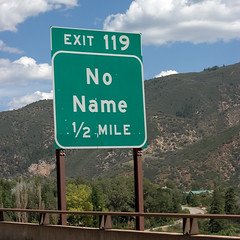
| No Name (Photo credit: Giant Ginkgo) |
My novel-in-progress, The
Power Club™, features a small city
full of teenaged characters with super-powers, six of whom belong to a
team. Three of those characters are
named Damon, Denise, and Danner.
I didn’t set out to create three prominent characters whose named
begin with the letter D, but there they are, and in so doing, I’ve violated one
of the cardinal rules for writing fiction: Give each character a distinct name.
Distinct names help readers keep your characters straight. They
also help you, the writer. I confess that, while writing scenes featuring both
characters, I’ve occasionally typed “Danner” instead of “Damon” and vice versa.
Members of my writing group have urged me to change Danner’s
name. (Damon, the central character, is
probably safe, and Denise is a girl, so she’s not likely to be confused with
the other two.)
Yet there are compelling reasons to use similar character
names:
- Similar names reflect reality. When I was in grade school, my small class included a Gregg, a Ginny and a Jenny, and two Steves. Even into adulthood, similar names abound: My brother and my cousin both married women named Christie. A writers group I joined last year had four members, two of whom were Kristi and Kristie. Even my present writers group includes Dennis and Dave and Kara and Ken—and Christine, for another “K” sound. I've lost track of how many teachers I know named Jane.
- Young fans have no trouble distinguishing rock band members with similar names. Duran Duran famously had three unrelated members with the last name Taylor (John, Andy, and Roger). Styx featured Dennis DeYoung and James “JY” Young. The British folk rock band Fairport Convention included three Daves (Swarbrick, Pegg, and Mattacks) for several years.
- Similar names crop up in respected works of fiction. The 1980s TV series Hill Street Blues, which pioneered the format of large ensemble casts, featured police officer Bobby Hill, who worked at the Hill Street police station—a coincidence which added to the cinéma vérité.
Some may point out that works of fiction should not reflect reality to such a degree that character names become distracting. They may also point out that it’s unlikely anyone would confuse a character with a street, and they would be right on both counts.
I’ve considered changing Danner’s name, but he’s such a
strong personality whose name suits him. Early in the story we learn he doesn’t like being called “Danny”. His masculine, adult-sounding name reflects
his desire to tower over everyone, literally and figuratively.
Likewise, Damon and Denise are intended to be vivid characters whose personalities and powers leave the reader with no trouble telling them apart.
And the similarity in names provides a subtle touch of reality
in a world dominated by an unreal situation, namely kids with powers. To
give each character an obviously distinct name would risk coming across as
artificial.
So, for now the names stay.
What do you think? Do your strive to give your characters distinct names?


